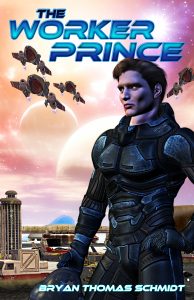
Greetings on this lovely morn:
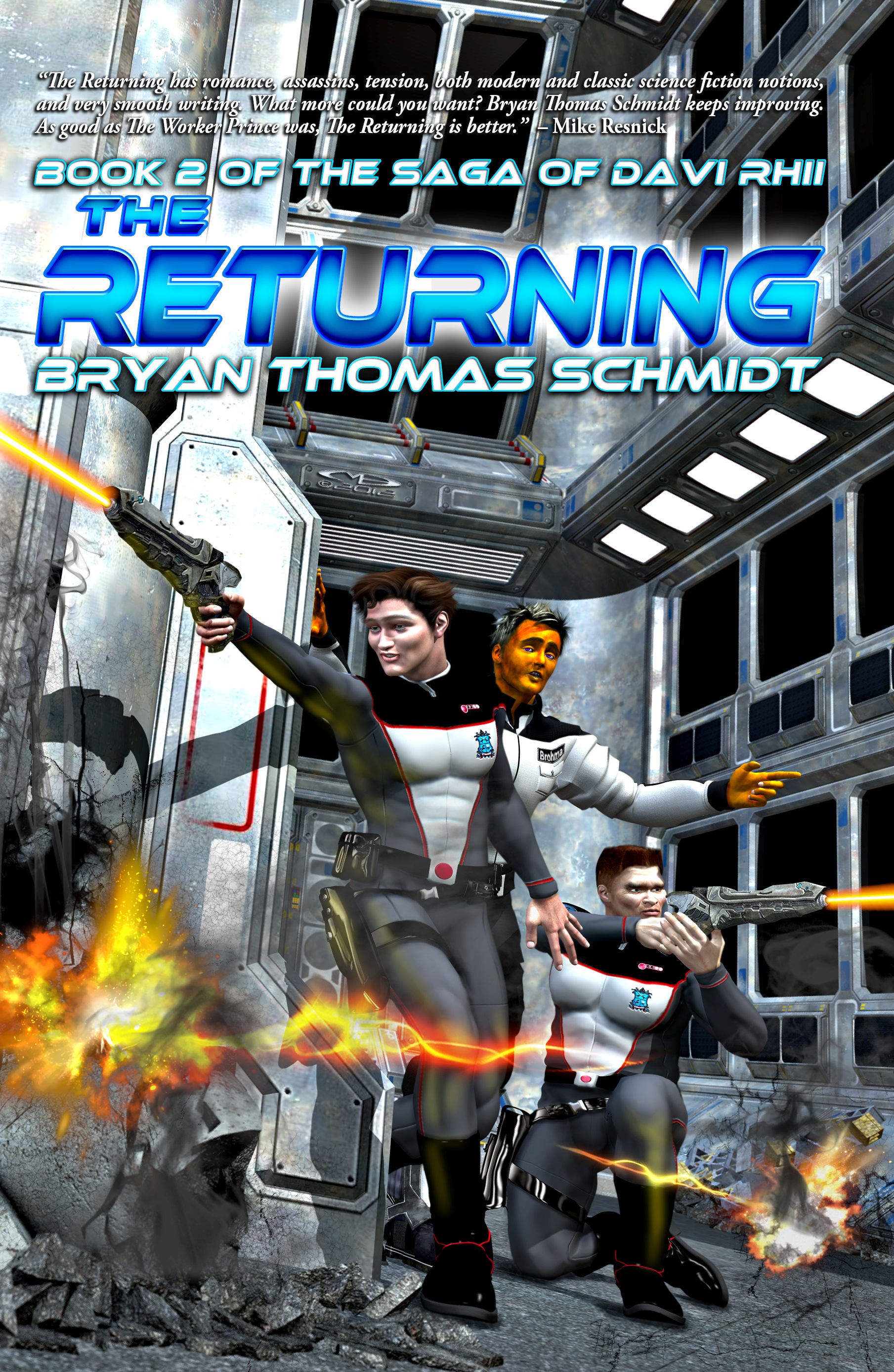
I am honored to introduce speculative fiction and nonfiction author Bryan Thomas Schmidt to everyone today. Mr. Schmidt has recently released his second novel in
The Saga of Davi Rhii, titled,
The Returning, and I am pleased to be participating in his Blog Tour for the very novel. Take a peek at the schedule for his Blog Tour
here, and be sure to tune in as he shares different aspects of his work, his experiences, and his imagination.
On The Careful Use Of Ordinary Moments To Build Character In Science Fiction
Bryan Thomas Schmidt
When you write far future space opera, as I have with my Saga Of Davi Rhii, you look for ways to create bridges between contemporary readers and your characters. One way to do this is to pick ordinary moments which might not be so foreign to contemporary life and show your characters living them. It reminds readers that even though they live on different planets in a different time, these characters and the readers still have a lot in common. But the use of ordinary moments requires care for several reasons.
For one, mundane moments make for mundane fiction. Readers can only take so much of your characters going about ordinary lives. People read stories for conflict, drama and compelling tales, none of which tend to be found in a retelling of dishwashing, laundry folding, etc. So like any exposition or descriptive detail, one must choose carefully and specifically and use the elements well to set the scene, reveal character etc. Here’s an example from my latest novel, The Returning, book 2 in my Saga. This is from Chapter 1 and is the first time we revisit Tela, Miri, Lura and Sol, who are Davi Rhii’s family and whom we came to know in The Worker Prince, book 1.
Tela flushed with warmth as she watched Davi's mothers, Miri and Lura, straightening furniture and artwork, discussing lighting and linens. She hadn't seen Miri so happy in months. The apartment was one formerly restricted for rental by government dignitaries, but Davi had been able to arrange with the government to open it for Miri. Sizable with a great view, it sat a block from the government center on Legon, the capital city of Legallis, not far from the Palace which had been Miri's life-long home. Across the street, amidst the high-rises, a preschool play-ground caught Tela's eye whenever she looked out the window.
The light blue-gray walls and lush navy carpet reflected light from the reflector pads overhead, lending a homey glow to the middle of each room. The central gathering, entertainment area sat like a hub amidst the spokes of the corridors leading to the kitchen, bedrooms, and sanitary facilities. The apartment also included an office which Miri used for a library. Altogether, the space wasn't really much smaller than Miri's suite at the Palace, even if it was less glamorous. Davi had often confided in Tela his worries about Miri's adjustment to civilian life, but from the vibe at her place, Tela thought Miri was doing fine.
She heard women's chattering coming from the kitchen as Davi's birth father, Sol, sat on a sofa, reading the news on a datapad. A hard worker who'd spent twenty years imprisoned away from his wife and son, Sol's skin was dark tan and his hands worn from years of manual labor. Still, he knew how to relax when he wasn't at the plant, and Tela found herself relieved that Sol and Tela's father, Telanus, had been given lighter duties these days.
“Tela, dear, come here, we'd like your opinion on this,” Miri called in her singsong alto.
“Don't let them drag you into this, Tela,” Sol teased, “Run for your life.”
Tela chuckled and patted him on the shoulder as she moved past and climbed the stairs toward the kitchen. Lura and Miri stood huddled together beside the balcony, watching the twin suns paint the sky with their setting. Shades of orange and blue mixed with pinks, yellows and reds in a stunning display. It took Tela's breath away.
What can we take from the details? First, Tela is part of the family just by the way Davi’s parents all treat her. Second, they are settled into an ordinary, urban civilian apartment which is not unfamiliar. It even has a preschool playground across the street. Most of us know places like that, so it’s familiar, despite “reflector pads” which are lighting and have that future feel. Also, the mothers are going about ordinary tasks while the father reads the news (not a paper, but a datapad, another scifi reference), an ordinary contemporary-type scene. And then the mothers want to involve the other woman.
All of this is a scene we’ve seen before in some way except the setting, names, locations, etc. are a bit abnormal and tell us it’s going on in an “other” outside our own typical place. And as the scene progresses, we get more bits outside our ordinary, which, elevates this from a cliché, normal scene to something with a new twist and angle that hints at something we haven’t seen.
Additionally, since what these characters went through in most of The Worker Prince was hardly routine or ordinary, seeing them relaxed and enjoying a peaceful life again sets the stage for contrast with what has gone before and what comes after in a way that increases the emotional impact of the story's events.
Lura and Miri stood huddled together beside the balcony, watching the twin suns paint the sky with their setting. Shades of orange and blue mixed with pinks, yellows and reds in a stunning display. It took Tela's breath away.
The women themselves were a contrast. Davi's birth mother, Lura, was shorter with tanned skin and long, brown hair the color of her son's, whereas Miri, his adoptive mother, stood taller, her light skin accented her light-blue eyes and short-cut brown hair. Both women's hair had streaks of gray, though it was clear Miri made more effort to cover it up. She stood with the regalness one might expect from a former Royal, while Lura's demeanor remained humble, a legacy of so many years spent in slavery. Lura wore a round and silver-colored necklace with a blue-green crest at its center. The four sections of the crest bore distinct images: laborers, soldiers, farmers and priests. Tela had seen the family crest many times now. Davi and Nila each wore identical necklaces. She’d never seen any of the three without them. Despite their differences, Davi's birth and adoptive mothers had made a concerted effort toward befriending each other. It showed in the way they smiled at each other and Tela.
“You wanted my opinion on a sunset?”
Lura and Miri laughed. “No dear. Lura was just commenting how nice it would be if this balcony were bigger. It would be a beautiful location for a joining, don't you think?” Many adoptive mothers would have been devastated to have their son's birth parents come back into his life, especially mothers as close to their sons as Miri was to Davi. But Miri had remained supportive and dignified despite any inner turmoil she must have felt. Miri's strength was an inspiration, except for those times when it made her pushy, like now.
Tela smiled at their eager grins. They'd been hinting at the idea for months, hoping Davi and Tela would set a date. “We haven't really discussed it. We're enjoying just being together right now. Working out the rough edges, I guess.”
“Working out a man's rough edges is a lifetime's endeavor, dear,” Miri counseled. “He'll be much easier to mold once he's officially yours, as they say.”
Lura grasped Tela's upper arm gently. “We're not trying to pressure you. You're just so good together and it makes us happy to see you both so in love.”
Tela nodded, locking the smile onto her face. “We are in love. But love's never perfect. I'm waiting for Davi to get over some of his archaic ideas before I even think about taking that step.”
“Archaic ideas?”
Tela continued before Miri could start lecturing on women's place in society. “It's a different age, Miri. Women may have once enjoyed sitting at home waiting for their man. That's just not who I am. I fell in love with your son as we fought together for freedom, side by side with the WFR. He showed me respect and appreciation. But I still think he'd prefer me safe at home in the kitchen.”
Miri looked as if she couldn't understand the objection. Lura smiled. “Davi's not like that. You mean the world to him. It's just that he worries about you. Can you blame him? You worry too.”
“I worry sometimes, but we both love what we do, and I support him. I deserve the same consideration.”
“Of course you do.”
“I thought you were still flying patrol rotations?” Miri seemed confused.
“I am. But not as often as Davi is.” That had been a decision by command, she realized, but Davi hadn't exactly jumped in to advocate on her behalf.
“Well, he's a Squadron commander. Their rotations are more frequent, naturally.” Miri turned back to the sunset. “I worry about you both.”
“Not much to worry about, Miri. We're at peace. The workers have their full citizenship. Patrols are pretty routine.” So why did she miss them so much?
“Mothers can't breathe without worrying,” Sol said as he came up behind them.
Tela and Lura chuckled as he wrapped his arms around Lura. “It gives us a purpose,” Lura said as she caressed his arm.
“I'd be happy if you focused some of that attention on me.” Sol leaned in and kissed her neck.
Lura blushed and pushed him away. “You're hardly neglected.” Tela wondered if she and Davi would still be so affectionate if they made it twenty years together.
“You'd think after twenty years in prison, a man could get expect a warmer homecoming.” Sol frowned, but the ends of his mouth jiggled, giving him away. When the women laughed, he gave up and joined them heartily.
“See what you have to look forward to in forty years, dear?” Lura said as she turned and kissed Sol's waiting lips.
Here, with the descriptions of the women’s dress, the societal structure, and the twin suns, we get more hints of a world beyond our own, every day one. And yet, the conflict and issues being discussed—dynamics between men and women, etc. are very familiar.
Taken out of context, it might seem this scene is too ordinary. But in the larger context of the novel where moments like this are not that common, it adds a touch of familiar that bridges readers into the story and relates them to the characters quickly, making them care about the characters as people like them, while at the same time, setting up dynamics and themes which will be sources of conflict over the course of the novel. Davi and Tela’s relationship and Tela’s frustrations with her lack of opportunity will play out in a through line through the rest of this book and into the sequel. The family relationships and dynamics of pressure to marry will continue to be an issue, even as family relationships shift and change under the weight of some tragic events.
Using ordinary moments is a great way to bring familiarity to speculative settings and characters, but, again, too much can become too boring and familiar in the same way that too little can prevent readers from connecting with the characters and being drawn into the story. What are some ways you use familiar moments to draw in readers to your fantastical settings and stories? Or to help them relate to characters? We’d love to discuss this further in comments.
***
In Bryan’s second novel, The Returning, new challenges arise as Davi Rhii’s rival Bordox and his uncle, Xalivar, seek revenge for his actions in The Worker Prince, putting his life and those of his friends and family in constant danger. Meanwhile, politics as usual has the Borali Alliance split apart over questions of citizenship and freedom for the former slaves. Someone’s even killing them off.
Davi’s involvement in the investigation turns his life upside down, including his relationship with his fiancée, Tela. The answers are not easy with his whole world at stake.
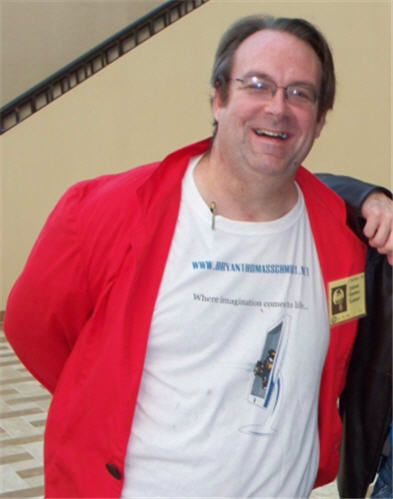 Bryan Thomas Schmidt is the author of the space opera novels The Worker Prince, a Barnes & Noble Book Clubs Year’s Best SF Releases of 2011 Honorable Mention, and The Returning, the collection The North Star Serial, Part 1, and several short stories featured in anthologies and magazines. He edited the anthology Space Battles: Full Throttle Space Tales #6 for Flying Pen Press, headlined by Mike Resnick. As a freelance editor, he’s edited a novels and nonfiction. He’s also the host of Science Fiction and Fantasy Writer’s Chat every Wednesday at 9 pm EST on Twitter under the hashtag #sffwrtcht. A frequent contributor to Adventures In SF Publishing, Grasping For The Wind and SFSignal, he can be found online as @BryanThomasS on Twitter or via his website. Bryan is an affiliate member of the SFWA.
Thank you for stopping by for Mr. Schmidt's
Tour.
And thank you, Bryan, for sharing with us~

 Jay Noel is a one-time high school English teacher, but now works in medical sales. He's been blogging since 2005, and has spent most of his writing career as a freelance editor. After finally gathering enough courage, he has taken the leap to writing his own work. His first novel, Dragonfly Warrior, is an Asian-inspired Steampunk story filled with pirates, ninjas, gunslingers, and samurai warriors. They say you must write what you love, and damnit, that's what he's done. It will be published in early 2013 by Hydra Publications.